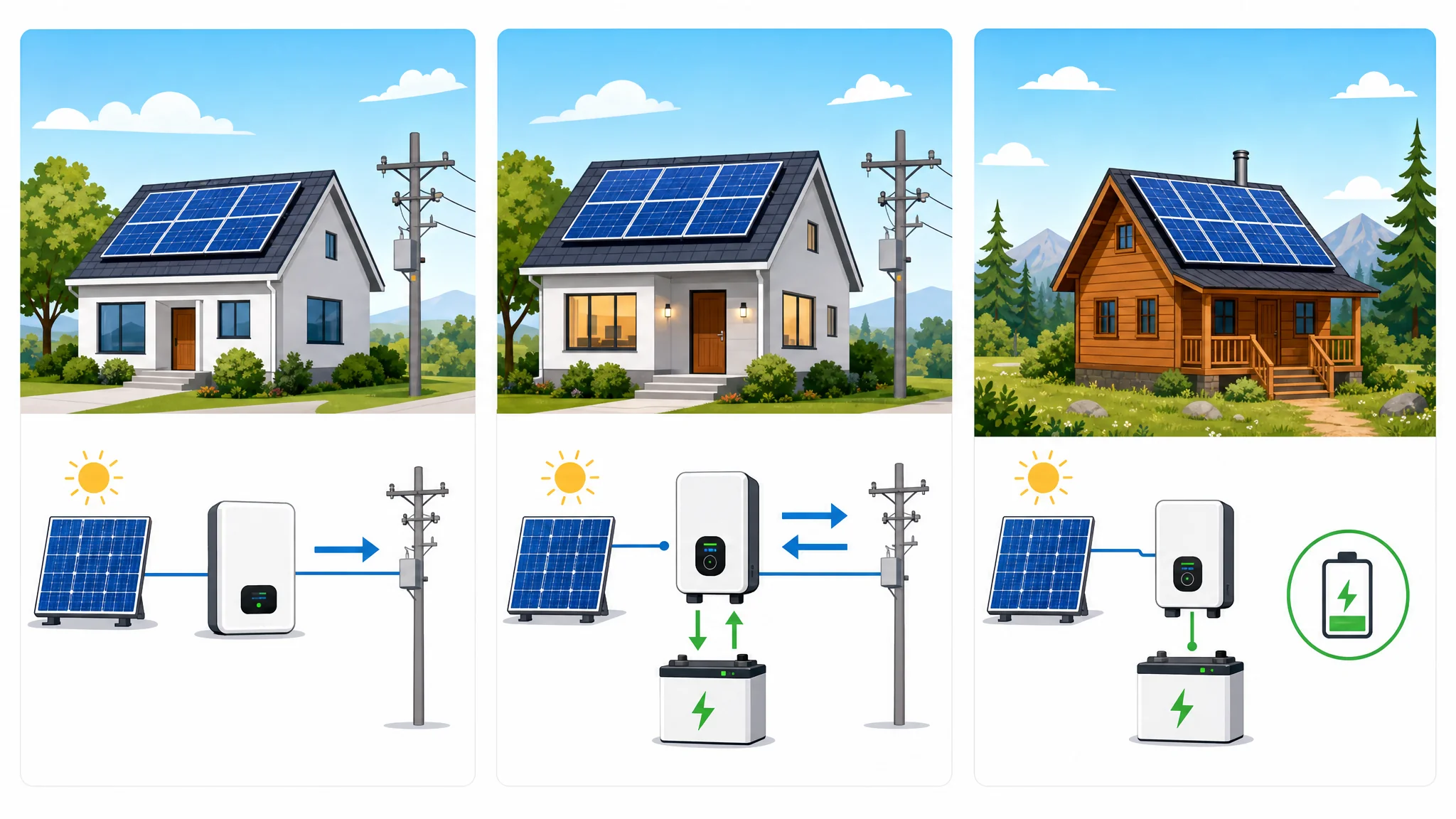

There are three ways to build a solar system, and choosing the wrong one is the single most expensive decision you’ll make. A cheap grid-tied system is dead weight during a blackout. An oversized off-grid system is thousands of euros wasted.
This guide cuts through the jargon and tells you exactly which architecture fits your situation in Ukraine or Poland in 2026.
The Three Systems at a Glance
| Grid-Tied | Hybrid | Off-Grid | |
|---|---|---|---|
| Connected to grid | Yes | Yes | No |
| Has battery | No | Usually | Always |
| Works in blackout | ❌ No | ✅ Yes | ✅ Yes |
| Can sell to grid | ✅ Yes | ✅ Yes | ❌ No |
| Cost (5 kW basis) | €3,500–€5,000 | €6,000–€10,000 | €7,000–€12,000 |
| Complexity | Low | Medium | High |
| Best for | Bill savings, stable grid | Backup + savings | Remote sites, no grid |
For most homes and businesses in Ukraine and Poland in 2026, the answer is hybrid. Let’s see why.
1. Grid-Tied Solar (The Simplest)
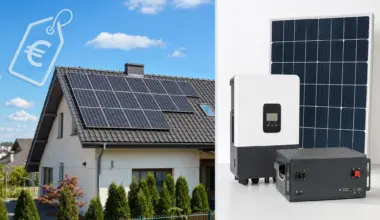
How it works: Panels → string inverter → grid. No battery. During the day you export surplus; at night you draw from the grid.
Pros:
- Cheapest upfront
- Zero maintenance (no battery)
- Highest return if you can sell exports at a good rate
Cons:
- Shuts off completely during a blackout — a mandatory safety feature (anti-islanding) protects linesmen
- No backup whatsoever
- Value depends entirely on feed-in/net-metering rules
Verdict: Only makes sense where the grid is stable and outages are rare. In Ukraine in 2026, a grid-tied-only system is close to useless for most buyers. In Poland it can work — but see our subsidies guide for how net-billing has changed the math.
2. Hybrid Solar (The Sweet Spot)
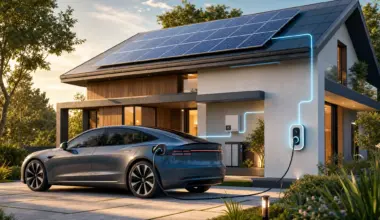
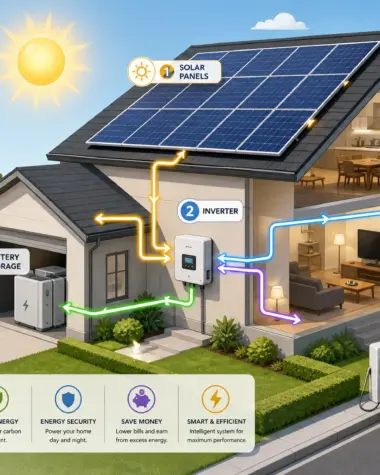
How it works: Panels → hybrid inverter → grid and battery. The inverter decides in real time whether to charge the battery, power your loads, export, or draw from the grid.
Pros:
- Runs your home during blackouts (sub-20 ms switchover)
- Can still export and earn from the grid
- Expandable — add panels or batteries later
- Best of both worlds
Cons:
- Higher cost (inverter + battery)
- More components to configure
- Slightly more complex commissioning
Verdict: The default choice for Ukraine (backup is essential) and increasingly for Poland (outages are rising and self-consumption beats export rates). Our ESS beginner’s guide walks through exactly how a hybrid system behaves hour-by-hour during an outage.
Compare hybrid inverter brands in our top 10 inverters list and Deye vs Growatt vs GSL comparison.
3. Off-Grid Solar (Total Independence)
How it works: Panels → charge controller / off-grid inverter → battery → loads. No grid connection at all.
Pros:
- Complete energy independence
- Works where there’s no grid (farms, cabins, remote sites)
- No utility bills, no permits
Cons:
- Expensive to size for winter — you must produce enough on the worst day
- Big battery bank required (2–3 days autonomy minimum)
- You own 100% of reliability — if you undersize, you go dark
- Usually needs a backup generator for extended cloudy periods
Verdict: Right for genuinely remote properties with no grid access. Wrong for a city home that has a grid — you’d pay 2–3× more for the same reliability a hybrid system delivers.
The Decision Tree
Answer these in order:
- Is there a working grid connection?
- No → Off-grid
- Yes → go to 2
- Do you need power during blackouts?
- No → Grid-tied is fine
- Yes → go to 3
- Do you want to earn from exports too?
- Yes → Hybrid
- No, backup only → Hybrid (still the best fit) or a dedicated ESS
For 9 out of 10 readers in Ukraine and Poland, step 3 ends at hybrid.
Cost Comparison: 5 kW, Real Numbers
| Component | Grid-Tied | Hybrid | Off-Grid |
|---|---|---|---|
| Panels (5 kW) | €1,400 | €1,400 | €2,100 |
| Inverter | €600 | €1,100 | €1,200 |
| Battery | — | €2,500 (10 kWh) | €4,500 (20 kWh) |
| Mounting/cabling | €800 | €900 | €1,100 |
| Labour | €700 | €800 | €900 |
| Total | ≈ €3,500 | ≈ €6,700 | ≈ €9,800 |
The hybrid premium over grid-tied (~€3,200) buys you a battery and true backup — the whole point in a blackout-prone region. See our full cost breakdown for Ukraine & Poland.
Which One for Which Situation?
| Situation | Best choice |
|---|---|
| City apartment, stable grid, Poland | Grid-tied or small hybrid |
| Family home, Ukraine, daily outages | Hybrid + battery |
| Small business needing 24/7 | Hybrid + large battery |
| Farm with no grid connection | Off-grid |
| Home wanting lowest payback | Grid-tied (Poland) |
| Home wanting independence | Hybrid or off-grid |
Hybrid Sizing Quick Guide
| Daily need | Panels | Inverter | Battery |
|---|---|---|---|
| 3 kWh | 2 kW | 3 kW | 5 kWh |
| 7 kWh | 3 kW | 5 kW | 10 kWh |
| 12 kWh | 5 kW | 8 kW | 15 kWh |
| 20 kWh | 8 kW | 10 kW | 20–25 kWh |
Use our step-by-step sizing calculator to get exact figures, then match the inverter to your power range in the hybrid inverter buying guide.
Myths, Debunked
- “Off-grid is the most reliable.” Only if it’s correctly sized for winter — undersized off-grid is less reliable than a hybrid backed by the grid.
- “Hybrid is overkill.” Not where outages happen. The battery pays for itself in avoided losses alone.
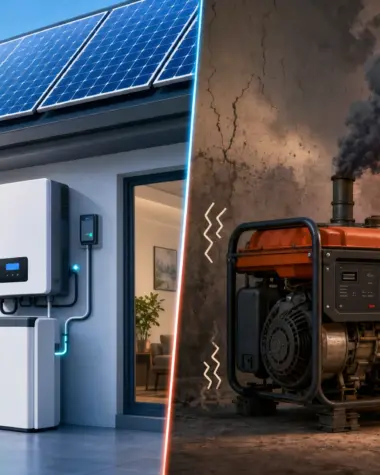
- “Grid-tied plus a generator is cheaper.” A generator’s fuel and maintenance costs overtake a battery within a few years — see the solar vs diesel comparison.
The Bottom Line
- Grid-tied = cheapest, but no backup.
- Hybrid = the right answer for most Ukraine/Poland homes and businesses.
- Off-grid = for genuine independence where no grid exists.
Pick your architecture before you shop for parts. Get this decision right and every later choice — inverter, battery, panels — becomes straightforward.
Read next: How to calculate your power needs · Hybrid inverter buying guide · Solar installation: quote to grid