
If you own a small business in Ukraine, you’ve already figured this out: you need more than “backup.” You need a complete power system that runs your business whether the grid is on or off.
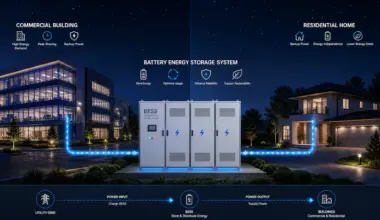
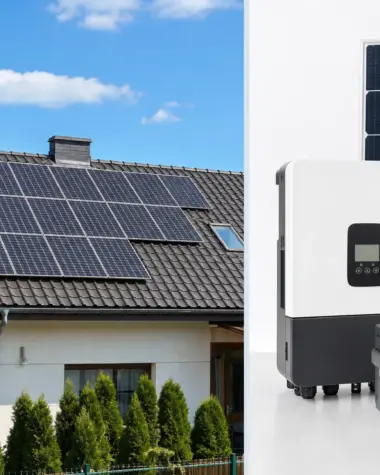
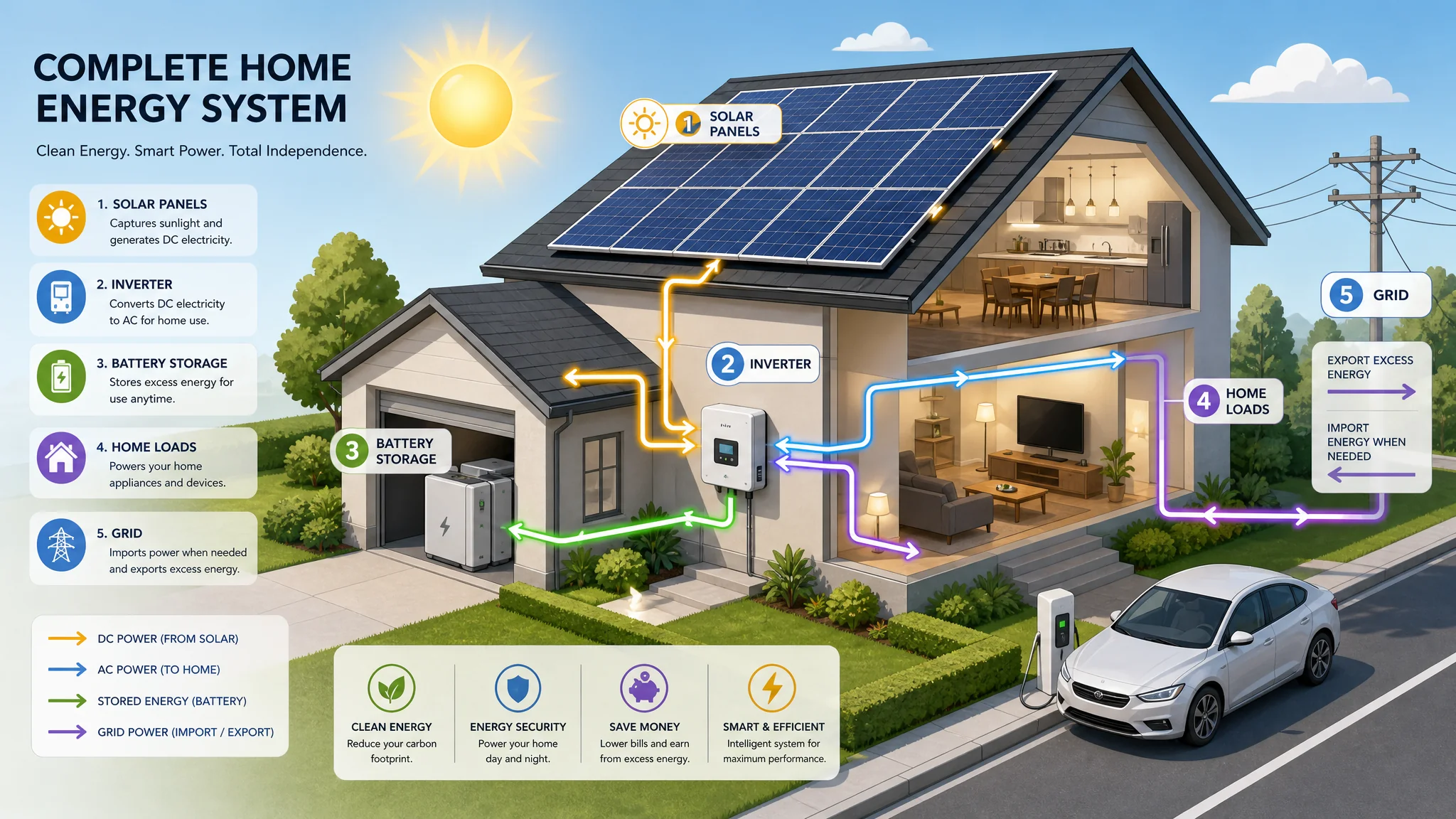
That’s an Energy Storage System (ESS) — solar panels + hybrid inverter + LiFePO4 battery, working together as a single system.
This guide explains what goes into an ESS, how it works, and how to spec one for a small business in Ukraine (or Poland) in 2026.
First: What an ESS Is NOT
Let’s clear up a common misunderstanding:
❌ An ESS is NOT a UPS. A UPS keeps a computer running for 15–30 minutes. An ESS keeps your entire business running for 16+ hours.
❌ An ESS is NOT a generator. A generator burns fuel and needs maintenance. An ESS is silent, has zero emissions, and requires no fuel.
❌ An ESS is NOT just a battery. It’s a system — inverter + battery + (optionally) solar panels — all working together automatically.
The Four Components of a Business ESS
1. Hybrid Inverter — The Brain
This is the most important component. It manages everything: grid power, battery charging, solar input, and the switchover during blackouts.
Must-have features for Ukraine:
- True off-grid operation (works without the grid)
- Sub-20ms switchover (your equipment doesn’t notice the blackout)
- Parallel support (for 3-phase or higher power)
- Generator input (in case you need to charge from a generator)
Recommended: Deye (best off-grid). Growatt (best value for Poland).
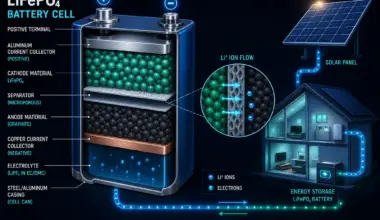
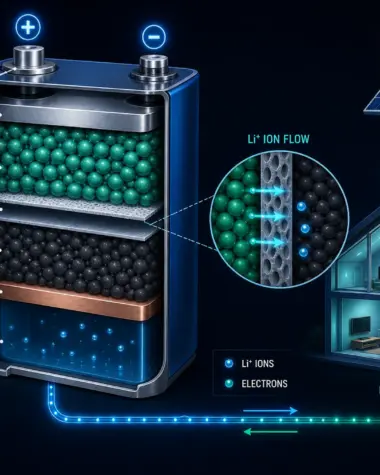
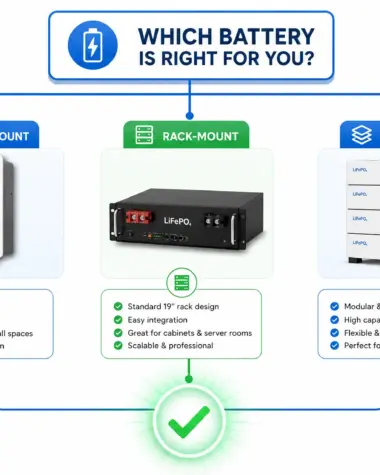
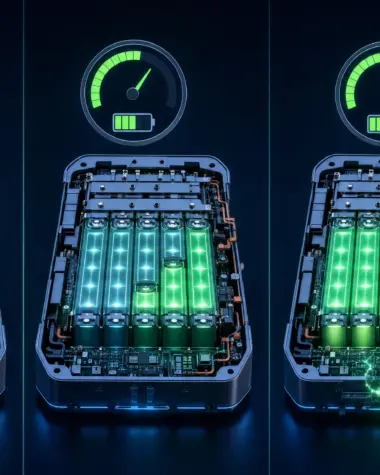
2. LiFePO4 Battery — The Fuel Tank
This stores the energy that powers your business during blackouts.
Size matters: For a typical small business (shop, café, office), you need 10–20 kWh usable capacity. See our LiFePO4 guide for detailed sizing.
Recommended: GSL Energy (best value). Deye (best integration).
3. Solar Panels — The Charger (Optional but Recommended)
Panels recharge your battery during the day, extending your runtime indefinitely.
Without panels: Your battery lasts as long as its capacity. When it’s empty, you need the grid or a generator.
With panels: On a sunny day, your battery recharges from solar. Your blackout runtime becomes unlimited during daylight hours.
Important for war zones: Panels are optional. Many Ukrainian businesses buy the inverter + battery first, then add panels when budget allows. Design your system for future solar expansion.
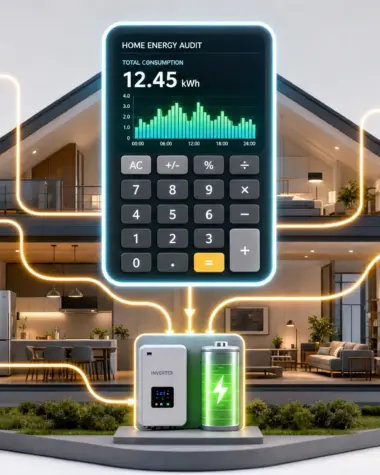
4. Monitoring — Your Dashboard
A good ESS comes with an app that shows:
- Battery charge level
- Solar production (if panels are installed)
- Home/business consumption
- Grid status (on/off)
- Historical data
How an ESS Works During a Blackout
Here’s the minute-by-minute sequence:
T+0s: Grid goes down
T+0.02s: Inverter detects the loss, disconnects from grid, switches to battery power. If you have a quality inverter (Deye, Victron), your lights don’t flicker. Your equipment doesn’t reset.
T+1h: Your business runs normally from battery. Fridges stay cold. Lights stay on. Internet stays up.
T+5h (daytime): If you have solar panels, they’re charging the battery while also powering your loads. Your runtime extends further.
T+10h: Half your battery is used. The inverter automatically prioritizes critical loads if you set up load-shedding.
T+12h+: When the grid comes back, the inverter seamlessly reconnects and starts recharging the battery.
Key point: This all happens automatically. No generator to start. No fuel to buy. No manual switching.
Sizing an ESS for Your Business
Quick Sizing by Business Type
| Business | Inverter | Battery | Panels (optional) | Est. Equipment Cost |
|---|---|---|---|---|
| Small shop / grocery | 5–8kW Deye | 10–15 kWh | 0–4kW | €3,500–€5,500 |
| Café / restaurant | 8–10kW Deye | 15–20 kWh | 0–6kW | €5,500–€8,000 |
| Office / co-working | 5–8kW Deye | 10–15 kWh | 0–4kW | €3,500–€5,500 |
| Medical clinic / pharmacy | 8–10kW Deye | 15–20 kWh | 4–6kW | €6,000–€9,000 |
| Workshop / auto repair | 8–10kW Deye (3-phase if needed) | 10–20 kWh | 4–8kW | €5,000–€10,000 |
| Apartment building (common) | 10–15kW 3-phase Deye (3x units) | 20–30 kWh | 0–10kW | €10,000–€15,000 |
Detailed Calculation (Example: Small Grocery Store)
Step 1 — List critical loads:
- 3 refrigerators (500W avg × 16h = 8 kWh)
- 1 freezer (400W avg × 16h = 6.4 kWh)
- LED lighting (200W × 16h = 3.2 kWh)
- POS terminal + router (100W × 16h = 1.6 kWh)
- Security cameras (50W × 16h = 0.8 kWh)
- Total: ~20 kWh/day — adjust for inverter loss (~15%) = 23 kWh needed
Step 2 — Size battery:
- LiFePO4 at 90% usable depth: 23 / 0.9 = 25.6 kWh rated capacity
- Recommended: two 12.8 kWh GSL Energy batteries in parallel (25.6 kWh total)
Step 3 — Size inverter:
- Max simultaneous load: fridges starting (3 × 2kW surge) + lights + POS = ~7kW surge
- Deye 8kW handles this. Or Deye 10kW for comfort margin.
Step 4 — Add solar (optional but smart):
- 4–6kW of panels on the roof recharges the battery during the day
- Even 4kW of panels on a sunny day produces ~20 kWh — enough to fully recharge
Total equipment cost: ~€5,000–€6,500
ESS vs Generator: The 2026 Reality
| Factor | ESS (LiFePO4) | Diesel Generator |
|---|---|---|
| Fuel cost per day (16h) | €0–2 (grid charging) | €40–80 (diesel) |
| Fuel availability | Always (electricity/grid/solar) | Queues, shortages, price spikes |
| Noise | Silent | 65–85 dB (you WILL hear it) |
| Maintenance | None | Oil changes, filters, injectors, storage |
| Lifespan | 15–20 years | 5–10 years (if maintained) |
| Startup | Instant (< 20ms) | 10–30 seconds |
| Auto-recharge | From solar or grid | Requires refueling |
| Cost per kWh over 10 years | ~€0.05–0.10 | ~€0.50–0.80 |
Verdict: For daily 16-hour blackouts, a generator is 5x more expensive to run than an ESS. And that’s before factoring in queuing for diesel at 6 AM.
The hybrid approach: Some businesses install BOTH — a small ESS for daily blackouts (silent, automatic, cheap to run) and a generator for multi-day grid failures (rare but possible).
What Installers Need to Know
Communication is everything:
- The inverter and battery MUST communicate via CAN or RS485
- Without it, the system uses voltage-based estimation, which is unreliable for daily deep cycling
- GSL Energy CAN protocol is compatible with most inverters out of the box
Load management:
- Not all loads are equal. Set up the inverter to prioritize critical loads and shed non-critical ones when battery is low
- On Deye: use the “Smart Load” or “Backup” output to separate critical from non-critical
Future expansion:
- Leave space in the battery rack for additional modules
- Run conduit for future solar panel wiring (even if no panels are installed yet)
- Choose an inverter that supports parallel expansion
Safety considerations during war:
- Mount batteries indoors (garage, utility room) — NOT in basements that might flood
- Ensure the ESS can be shut down quickly in an emergency
- Document the system layout for emergency responders
Bottom Line
An ESS is not a luxury for Ukrainian businesses in 2026. It’s a necessity. The question isn’t “should I buy one” — it’s “how much capacity do I need?”
| Business Type | Minimum Viable ESS (€) | Recommended ESS (€) |
|---|---|---|
| Small shop | 5kWh + 5kW inverter ~€2,500 | 10–15 kWh ~€4,000 |
| Café / restaurant | 10kWh + 8kW ~€4,000 | 15–20 kWh ~€6,500 |
| Office | 5kWh + 5kW ~€2,500 | 10–15 kWh ~€4,000 |
| Clinic | 10kWh + 8kW ~€4,000 | 15–20 kWh ~€6,000 |
Start with the inverter and battery. Add solar panels later. Design for expansion from day one.
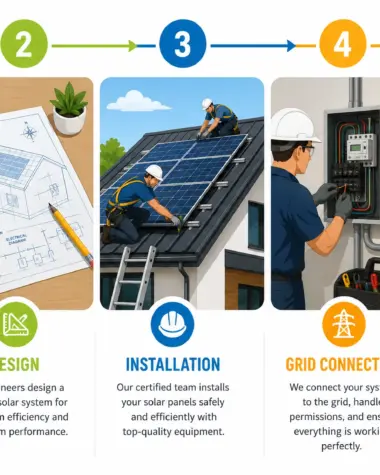
📌 Read our Complete Installation Guide for step-by-step setup instructions.
📌 Compare Deye vs Growatt for your inverter choice.